
Small Business Reputation Management: How to Win More Local Jobs
Reputation Management for Small Businesses builds trust even before the customer calls you. Find out how reviews, Google My Business Profile, and third party listings can help you get more business.

Small business reputation management is the practice of measuring, developing, and protecting the image of your business online. It includes things such as claiming your local business listing, managing Google and Yelp reviews, responding promptly to your reviews, and operating an automated system that sends out requests for reviews to all of your customers. This is not a luxury for large brands. It is the main mechanism by which any local company becomes visible, trusted, and chosen on a consistent basis.
If you run a trade business, our guide to reputation management for home services covers the same ideas with a weekly routine built for contractors.
Every day, potential customers search your business name before they call. What they find determines whether they hire you or your competitor.
Why the Importance of Online Reputation Management Should Not Be Underestimated
It is the first impression you make, even before you speak with anyone. BrightLocal's annual Local Consumer Review Survey consistently finds that nearly every consumer reads online reviews before choosing a local business.
Practically, let’s look at it this way: a plumber with 12 reviews and a rating of 4.8 out of 5 will secure more deals than another company having 200 reviews with an average of 3.9 out of 5.
Perception, powered by reviews, drives revenue. Businesses that ignore this lose customers silently, with no entry on any profit and loss statement.
The importance of online reputation management goes beyond star ratings. Google uses review volume, review velocity, recency, and response rate as direct local ranking signals. A business collecting three to five new reviews weekly signals trust to Google's algorithm. Static profiles portray irrelevance no matter how good the service actually is.
A strong reputation system delivers benefits that compound over time.
Builds trust. High ratings and consistent, recent reviews make new customers feel safe choosing you over an unknown competitor.
Drives sales. Buyers pick the business with stronger, fresher proof over one that looks quiet or outdated.
Fixes problems fast. Replying to a frustrated customer within hours, not days, can turn a bad experience into a loyal one.
Improves local SEO. Fresh, frequent reviews and complete profiles are ranking signals search engines reward directly.
Protects your image. Active monitoring catches a bad review or a data error before it spreads and shapes what people believe about you.
If you do not manage your online reputation, somebody else will be doing it on your behalf. A dedicated platform for business reputation management makes this far easier to sustain week after week than trying to track everything by hand.
Local Reputation Management, the Discipline That Wins Local Search
Local reputation management is the process of reviewing, building, and optimizing the way your business is seen on review platforms, listing websites, and search engines in your particular region. This includes collecting feedback, correcting your listing, and responding to reviews in order to develop local trust and get higher ranking among local search results.
For a small business, all the action is in one place. Getting into Google's three-pack, or top three map listings on Google, is key in generating leads. Otherwise, you have very little visibility at all.
The Google Business Profile is your single most important local resource, and its optimization requires more than simply providing your address. Businesses that upload weekly photos, update their services regularly, and respond to all reviews outperform those who set up their Google Business Profile and then leave it alone.
Listing accuracy is just as important as having many reviews. Your Name, Address, and Phone Number (NAP for short), need to be exactly identical on all platforms. Discrepancies in information will not only mislead customers but also confuse Google, thus negatively affecting their trust without even getting to reading any reviews.
Local reputation management also extends well beyond Google. Yelp, Angi, Houzz, Facebook, Next Door, Apple Maps, BBB, and Trustpilot have already made their mark before your potential customer reaches out to you. A roofer who has 80 Google reviews and 30 Angi reviews will attract more customers than a roofer who has 110 reviews on Google.
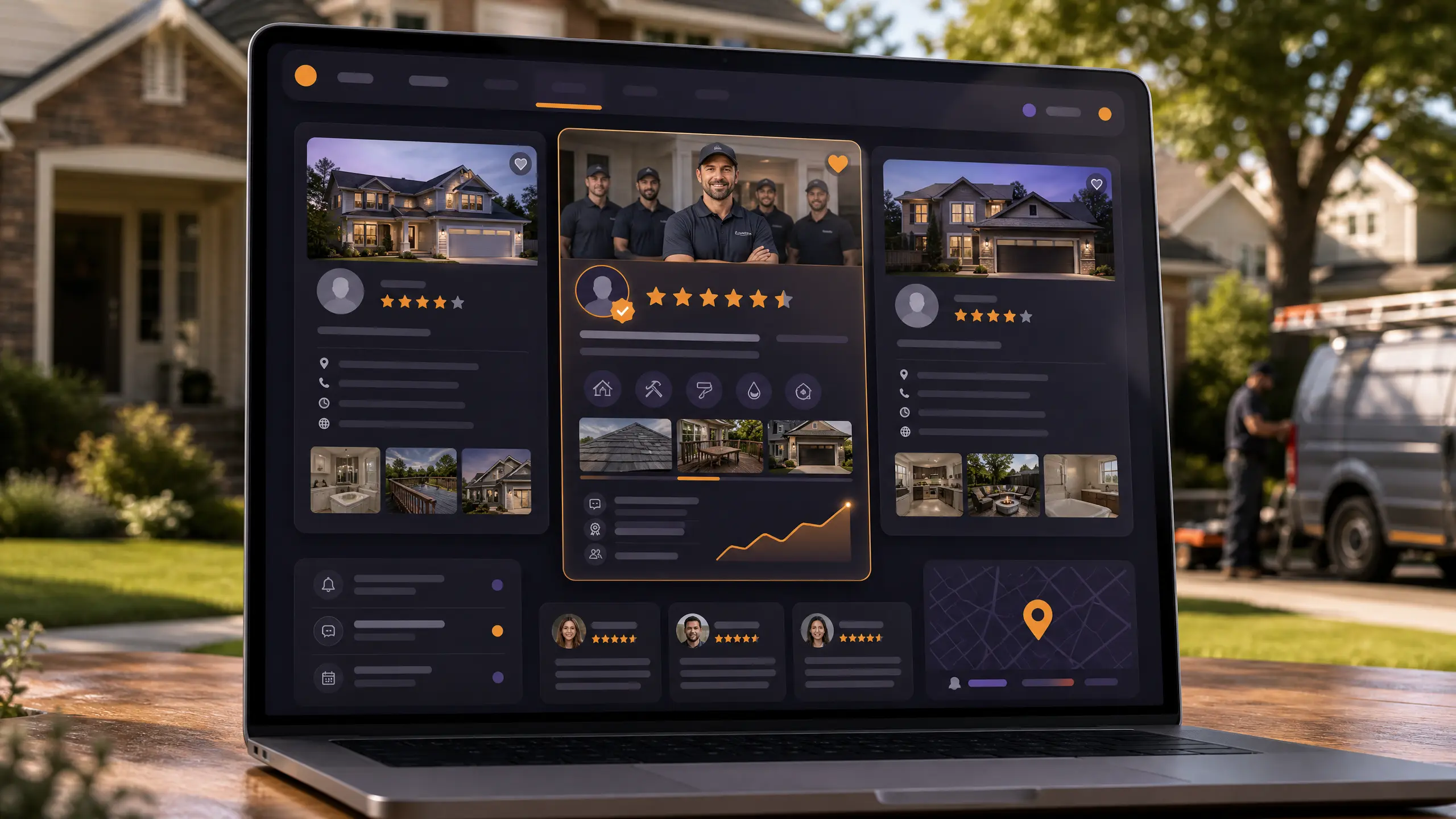
DIY Online Reputation Management, Six Steps That Actually Work
You do not need an agency to start. Done consistently, do-it-yourself reputation management often does more for a local business than a paid marketing campaign.
Step 1: Audit your current standing. Do an incognito search of your company name and find out exactly what a new person would see on the first page. Verify your Google business listing, the top three review sites, and verify that all of your hours, location, and telephone number is consistent across the board.
Step 2. Build a consistent review collection process. Reviews do not come in on their own. You need a system that asks every customer, every time, without depending on anyone's memory. If you want the full process explained, read our guide on how to get more Google reviews. Here is a quick summary: ask at the time of job completion and send an immediate link.
Step 3. Learn how to request a review without being pushy. Most contractors find it hard to ask for one. The fix is simple wording and good timing. For copy-and-paste scripts for in-person, SMS, and email requests, see our guide on how to ask for a review in a way customers say yes to.
Step 4. Reply to every review within 24 hours. Google factors response rate into local rankings. Positive reviews deserve a genuine, personalized reply, not a copy-paste line. Negative reviews need empathy first, then a solution, then nothing else (our negative review response templates help here). Managed well, a negative review can become one of the strongest signals of your trustworthiness. Take heated complaints offline quickly and work out a fix privately rather than arguing in public.
Write every response for the next customer who will read it, not just the one who left it. Personalized replies that name the customer and reference the specific job also add indexed content that helps your local search visibility.
Step 5. Monitor beyond Google every week. Set up a free brand alert for your business name and check Yelp, Angi, Facebook, Next Door, and Houzz on a regular schedule. Neglected platforms can hurt your reputation badly without you noticing. A single negative review on Angi is worth ten positive reviews on Google if nobody else weighs in.
Step 6. Keep your listings active and your presence visible. Update your Google Business Profile with project photos and posts regularly. Claim your business name on LinkedIn, Facebook, and X so you control those top-ranking spaces too. A contractor who posts project progress consistently will often outrank a competitor who has more stars.
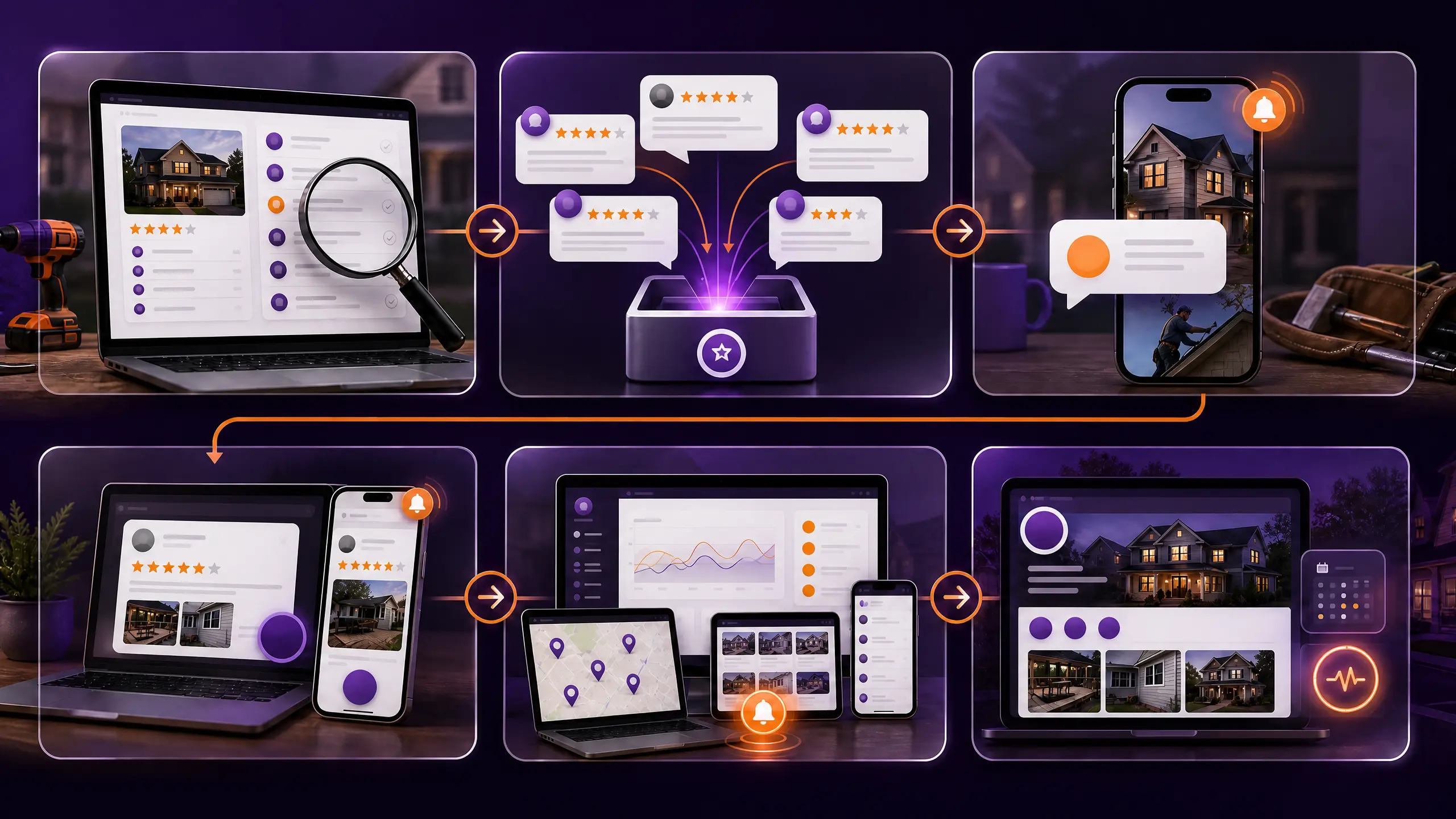
Online PR and Reputation Management, the Value of Third Party Credibility
Online PR and reputation management for small business owners is not about writing press releases. It is about earning third-party credibility from places that already have trust built in, and about knowing how to respond when something threatens that trust.
Being mentioned on Houzz, Angi, HomeAdvisor, and the Better Business Bureau before a user even reaches your website gives potential clients independent validation. A mention in a local business roundup or a keyword-ranking article adds another touchpoint where a customer can find you.
This matters even more today because AI search tools like Chat GPT, Perplexity, and Google AI Overviews lean heavily on external signals to recommend local service providers. A contractor mentioned and reviewed across multiple platforms is far more likely to be surfaced in an AI-generated recommendation than one who only exists on a single site.
Accreditation from the BBB, a HomeAdvisor Top Rated badge, or an active presence on Next Door all function as citation signals that both human searchers and AI systems factor into trust decisions.
Two habits round out a strong online PR approach. First, track your brand proactively with a free tool like Google Alerts, so you know about a mention or a review the same day it appears. Second, if a negative situation does surface, respond with a transparent, factual statement rather than silence, and keep publishing helpful content that reinforces the reputation you have actually earned.
The most efficient way to build this presence consistently is through a contractor review management tool that collects reviews across every connected platform from a single customer interaction, instead of managing each platform separately by hand.
Small Business Reputation Management Services: DIY, Software, or Agency?
Once the basics are in place, the question becomes who does the work every week. There are three realistic options.
Do it yourself. Free apart from your time. Works when you have a handful of jobs a week and someone disciplined enough to ask, reply, and check every platform. It breaks down once volume grows or the owner gets busy.
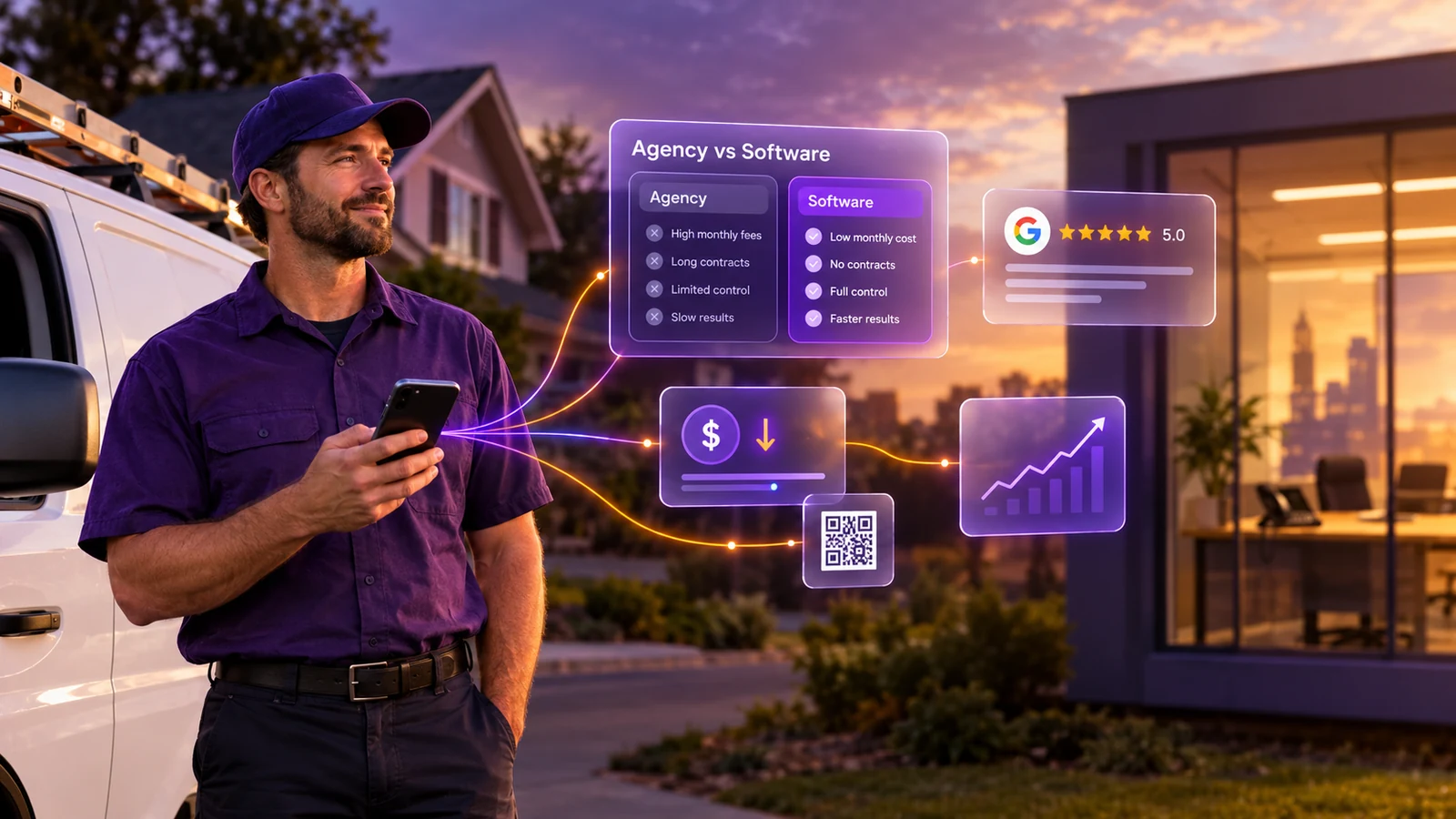
Reputation management software. A monthly subscription that automates the repetitive parts: review requests, one inbox for every platform, reply drafts, and alerts on negative reviews. You still own the relationship; the software makes sure nothing is forgotten.
An agency or managed service. A monthly retainer, usually the most expensive option. It suits businesses with no time at all, but agencies cannot be on the job site when the customer is happiest, so they still depend on you or your crew for the ask.
For most service businesses, software plus a simple in-person habit gives the best return: the crew asks on site, and the software handles everything after that.
A Weekly Reputation Checklist for Small Businesses
Ask every customer for a review at job completion, in person.
Reply to every new review, positive or negative, within 24 hours.
Add at least one new photo or post to your Google Business Profile.
Check Yelp, Facebook, Angi, Nextdoor, and any industry site your buyers use.
Report reviews that clearly break platform rules, with evidence.
Compare your review count and rating against your top three local competitors once a month.
What Small Business Reputation Management Looks Like in Practice
Here is a typical scenario. An HVAC company in a mid-sized market has 22 Google reviews averaging 4.6. A competitor has 87 reviews averaging 4.4. In most cases, the competitor wins the new client simply because they have more reviews.
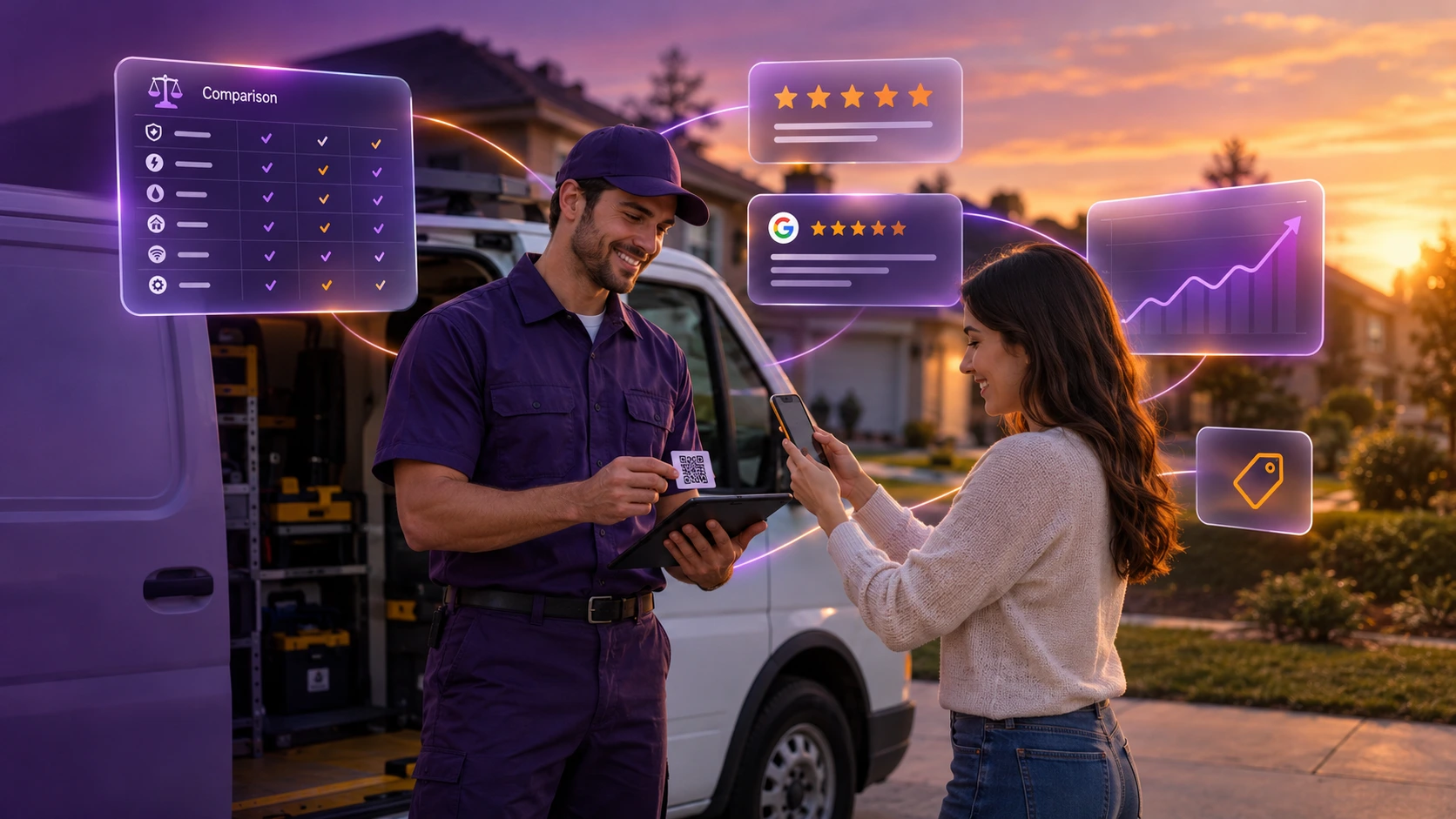
Now the contractor puts a system in place. Every technician shows the homeowner a QR code at job completion, and a single automated follow-up goes out the same day. At four or five new reviews a week, they pass 50 reviews within about two months, and the gap that kept them out of the local three-pack starts to close.
The work did not change. The reputation system did.
Build Your Reputation System Before You Need It
The businesses dominating local search in your market are not outspending you on ads. They are out-executing on reputation, one job at a time, through a consistent system that runs the same way every week.
Small business reputation management is that system. Start collecting reviews at job completion today, reply to every piece of feedback, and get listed on the platforms your buyers actually trust. Your Google Business Profile and your call volume will look different within 60 days.
Sync Reviews gives small service businesses that system in one place: on-site video reviews by QR code, every platform in one dashboard, AI reply drafts, and alerts on negative reviews. See plans and pricing or start a 7-day free trial, no credit card.
Want to stop losing jobs to contractors with more reviews?
Start your 7-day free trial. Show your first QR code today. Have proof in your dashboard before tonight.
Start Free TrialFrequently asked questions
Small business reputation management is the ongoing process of monitoring, building, and responding to your business's online presence, primarily through customer reviews, platform listings, and Google Business Profile activity. For local service businesses, it directly affects how often you appear in search results and how many new customers choose you over competitors.


Stop losing jobs to contractors
with more reviews.
Show your first QR code today. Have proof in your dashboard
before tonight. 7 days free, no credit card, no contracts.