
Plumber Review Management: How to Get More 5-Star Google Reviews
The pipe burst at 2 AM. One plumber has 210 reviews, latest from four days ago. The other has 30, mostly a year old. The homeowner calls the first without hesitation. Here's how to be that plumber.
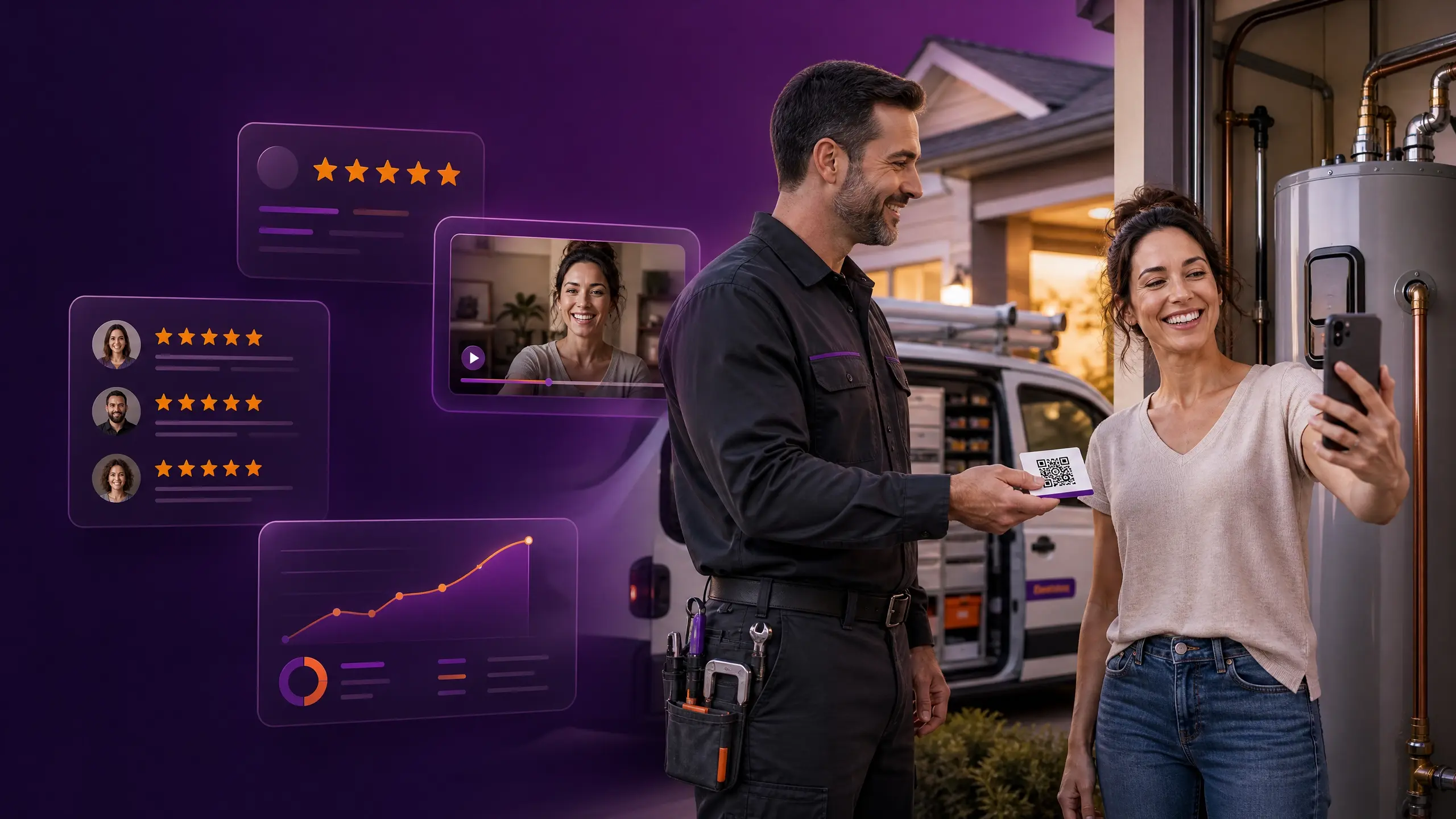
The pipe burst at 2 AM. Water starts flooding the kitchen floor. The homeowner picks up the phone, types in “emergency plumber near me,” and finds two competing businesses side by side. The one that has 210 reviews and its latest one dates back four days.
The other has 30 reviews, most over a year old. They call the first one without a second thought.
What is plumber review management?
It's the ongoing process of collecting customer reviews after plumbing jobs, responding to feedback quickly, and keeping your profile active enough that homeowners trust you the moment they need you most, often during an emergency with no time to compare options carefully.
Plumbing reviews carry a specific kind of weight other trades don't deal with as often. Decisions get made in seconds, usually during a stressful moment, and the review profile does the vetting a homeowner doesn't have time to do themselves.
This guide covers what most plumbing review content skips: the real numbers behind different ways of asking, why video reviews matter more during emergency-driven decisions, and how AI tools are now reading your review profile before recommending you.
The Real Numbers Behind Asking for Reviews
Most advice says to ask right after the job. Fewer sources say which method of asking actually converts. Here's the real difference:
Method | Typical Response Rate | Why |
Review link on the invoice | 2 to 5 percent | Customer is focused on the bill, not the experience |
Email sent a day or two later | 4 to 7 percent | Memory of the job has already started to fade |
Text message link same day | 8 to 13 percent | Faster, but still requires the customer to click and type |
In-person ask before leaving | 15 to 25 percent | High-trust moment, but still depends on follow-through |
QR code with on-site video capture | 35 to 55 percent | Removes nearly all friction; customer records a short clip on the spot |
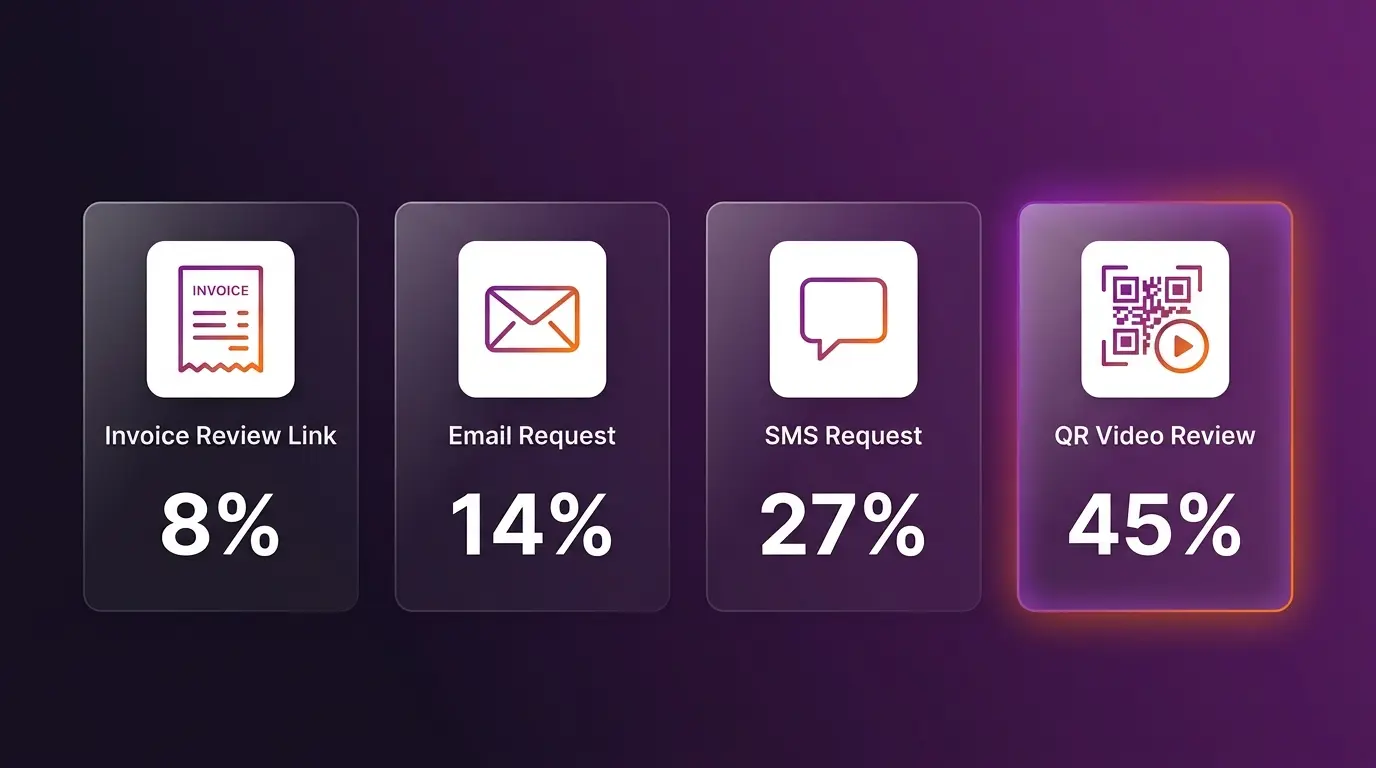
The invoice link is the most common method plumbing companies rely on, and it's also the weakest. By the time a customer opens the bill, they're thinking about the cost, not the relief of a fixed pipe.
Why Video Reviews Matter More for Emergency-Driven Decisions
Plumbing decisions often happen under pressure. A homeowner comparing emergency plumbers at midnight isn't reading through ten paragraphs of a written review. Homeowners in a crisis aren't reading text; they're scanning for immediate proof of reliability.
A brief video testimonial where a client confirms the team arrived promptly to stop a major leak provides that essential vetting in seconds, offering a high-trust signal that an anxious person can process instantly while scrolling for help.
A star rating alone can't do that. A wall of text reviews can't either, not in the moment someone actually needs it.
This is the idea behind Sync Reviews plumbing reputation management software: capturing reviews as on-site video right after the job. At the same time, the relief of a solved emergency is still fresh, then turning that into content for your Google profile and website automatically.
How AI Tools Are Now Reading Plumbing Reviews
Almost every guide on this topic focuses on Google's map pack. Very few mention what's happening in AI search.
When someone asks Chat GPT, Google AI Mode, or Perplexity "who's a reliable emergency plumber near me," these tools pull from the same signals that have always mattered: review volume, star rating, how recent the reviews are, and what the review text actually says about the work. A plumbing company with a thin or outdated review profile doesn't get mentioned in an AI answer at all. . One with a strong, recent, detailed profile does.
Your reviews are no longer just an SEO input. They're becoming a factor in whether AI tools recommend you as a trustworthy option, or skip you entirely.
When to Ask, Job by Job
Not every plumbing job earns the same review request at the same moment.
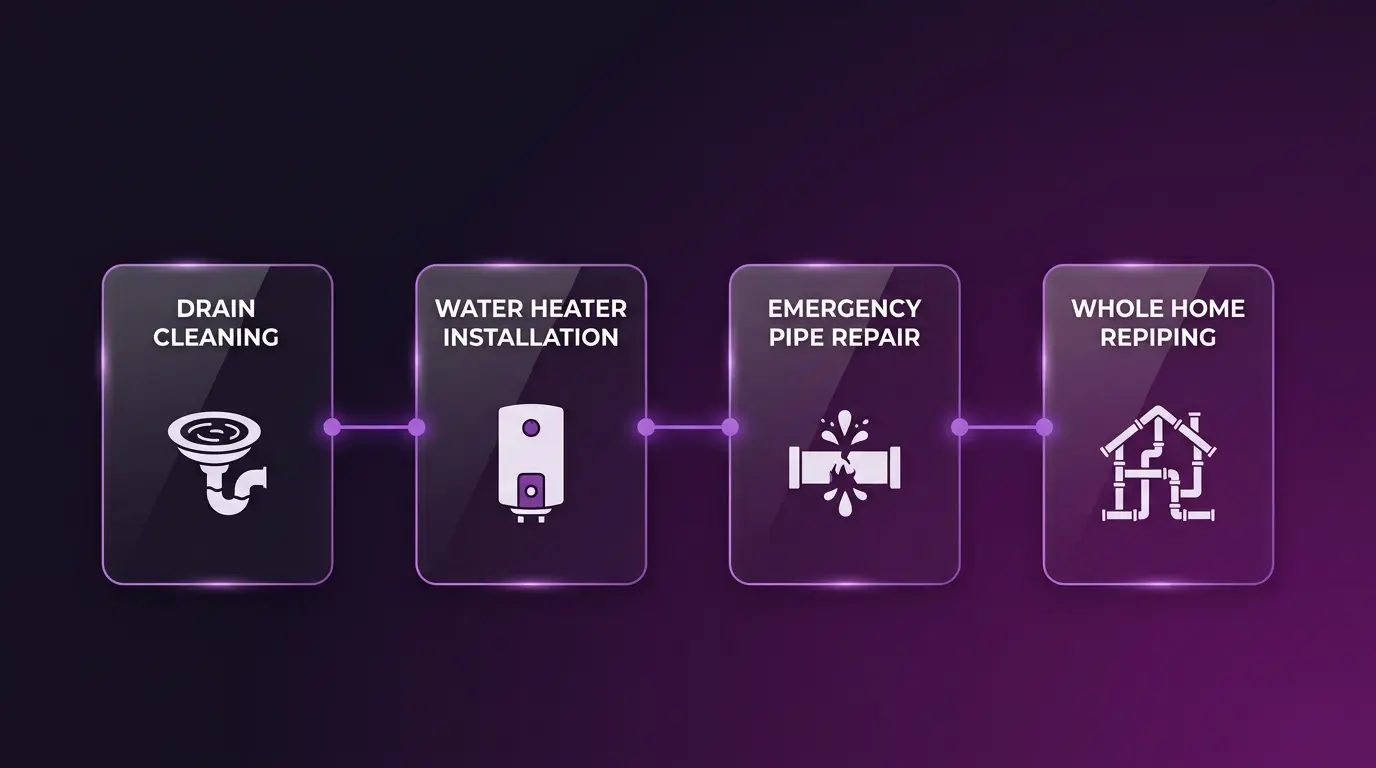
Drain cleaning or minor repairs: Ask once the customer sees the fix working, right there on the spot.
Installation of water heaters: When you have shown them how the new system works and they know how things have been changed.
Emergency repairs (broken pipes, sewer backups): When the immediate problem has been fixed and the client has had time to feel relieved from the panic, not while they are panicking.
Re-piping jobs or bigger installations: After your final walk-through and when they see all the work you have done.
Pricing disputes or callbacks: Don't ask yet. Resolve the issue first. Asking during an unresolved concern almost always backfires.
Staying Compliant: What Not to Do
Some review advice circulating for plumbing businesses is outdated or, worse, against platform policy. Two mistakes to avoid entirely:
Never incentivize reviews. Offering a coupon, discount, or gift in exchange for a review violates Google's terms of service, and the FTC's rule on fake and manipulated reviews makes clear this applies at the federal level too, regardless of how the offer is framed.
Never use review gating, the practice of routing happy customers to a public review page while routing unhappy ones to a private form. Google's systems are built to detect this pattern, and getting caught can shut down your review flow entirely.
The safest approach is also the simplest: ask everyone honestly, let them write whatever they want, and never filter who gets asked based on how satisfied they seem.
Handling a Negative Plumbing Review
Plumbing complaints often involve pricing, timing, or a fix that didn't hold, all sensitive enough to make public arguments tempting and risky.
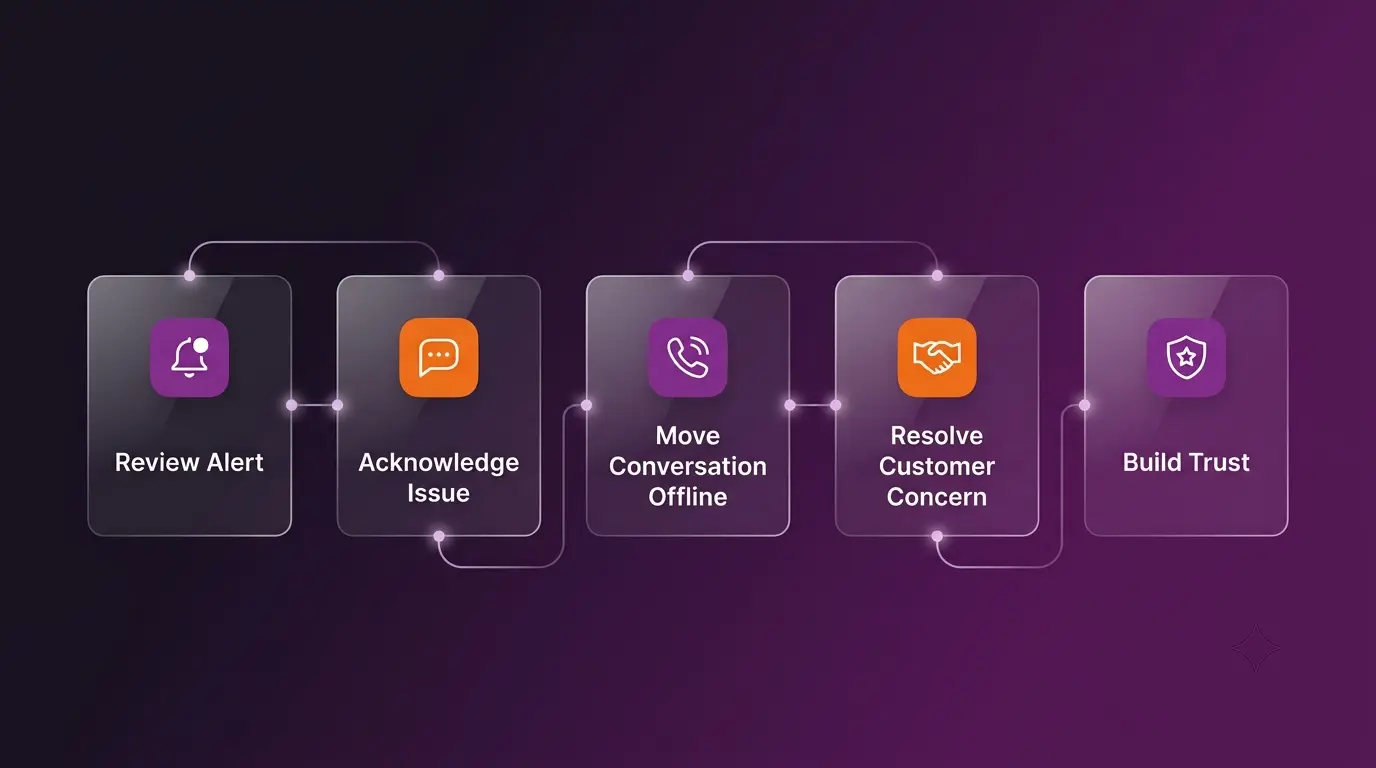
Respond within 24 hours. Speed shows you take the concern seriously.
Acknowledge the specific issue, not a generic apology.
Never argue pricing or diagnosis details publicly. Invite the customer to review the specifics privately.
Move the resolution offline through a direct phone number or email.
A cool-headed, professional response to a negative review generally garners more credibility than an additional five-star review. Future home buyers will be aware of the complaint, but also how it was addressed.
Reporting False or Policy Violating Reviews
Fake reviews happen, sometimes from competitors, sometimes from people who were never actual customers.
Review your employment files. If the name or details of the person leaving the review don’t correspond to anything in your files, there is your first piece of evidence.
Report this violation of policy using the Google Business Profile platform, choosing the applicable policy.
State in your reply that you do not have any record of this customer. Do it matter-of-factly and don't be defensive about it.
Be patient. The process may take up to two weeks, but specific evidence is considered more often than just a claim.
Building a Review System That Works Without You Chasing It
Most plumbing companies collect reviews by accident, relying on an invoice link that rarely gets clicked. A real system makes asking the easy default after every completed job, not an afterthought buried in a bill.
If you want to see how on-site video capture fits into your existing workflow, take a look at how Sync Reviews works across capture, showcase, convert, and protect for home service contractors.
Want to stop losing jobs to contractors with more reviews?
Start your 7-day free trial. Show your first QR code today. Have proof in your dashboard before tonight.
Start Free Trial
Stop losing jobs to contractors
with more reviews.
Show your first QR code today. Have proof in your dashboard
before tonight. 7 days free, no credit card, no contracts.