
Electrician Review Management: How to Get More 5-Star Google Reviews
The real numbers behind asking for electrician reviews, why video testimonials build more trust for safety-sensitive work, and how AI tools now read your reviews.
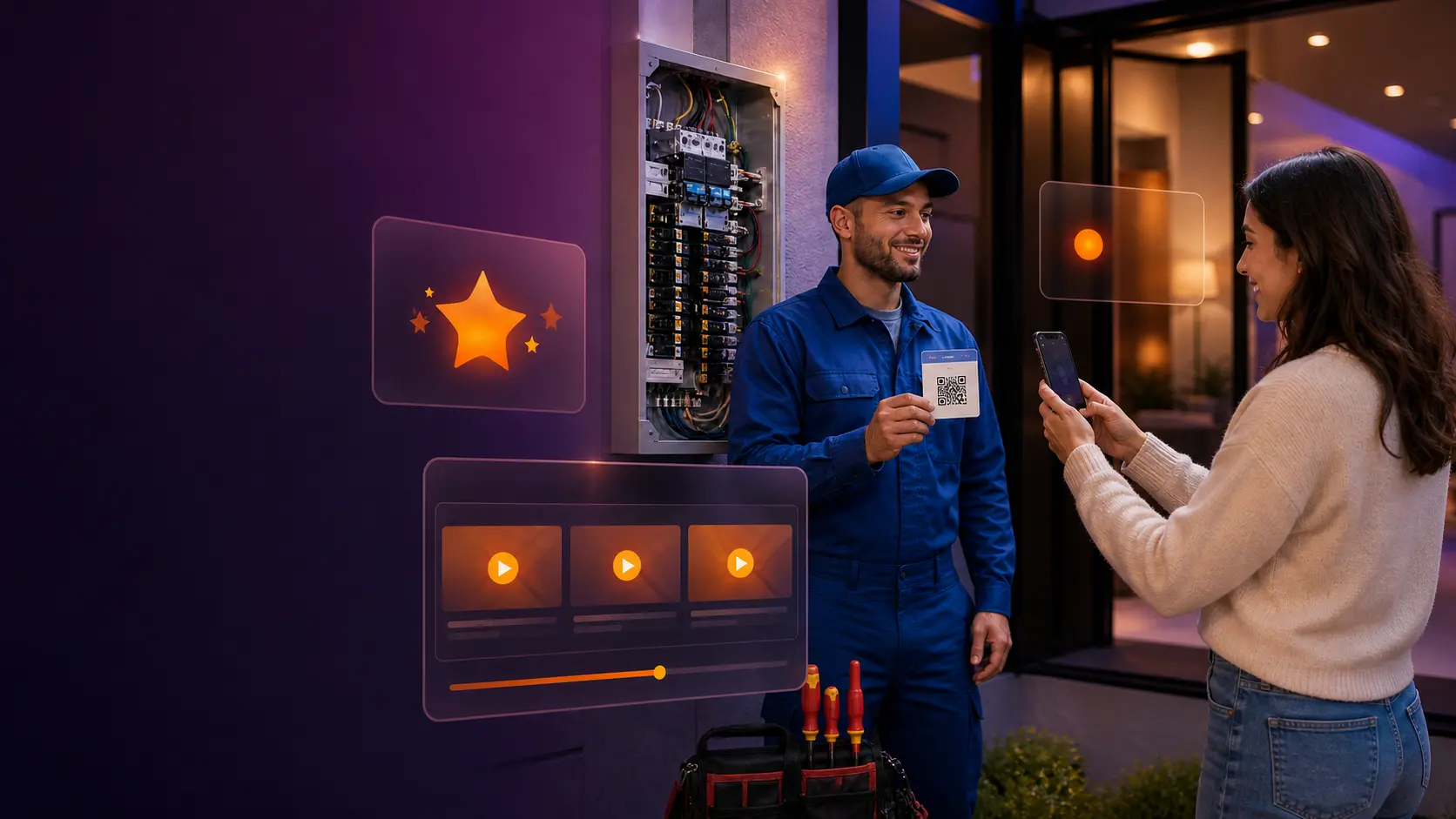
Homeowner's Breaker Is Tripping At 9 PM. They pull up Google, search for an electrician, and land on two nearly identical companies. One has 180 reviews, the newest from last week. The other has 40 reviews, the newest from eight months ago. They don't call the second one, no matter how good the work actually is.
What is electrician review management?
It's the ongoing process of collecting customer reviews after electrical jobs, responding to feedback quickly, and keeping your review profile active enough that homeowners trust you with safety-sensitive work before they ever call.
When it comes to working inside a home, electrical services get more attention than any other home service provider. Customers are asking a stranger to come into their houses and make repairs on systems that they cannot see or even comprehend, particularly in situations of stress and emergency. That is precisely why the review marketing approach which will work for a restaurant or a retail store won't be directly applicable to an electrician's business.
This article will talk about everything that is usually not covered by the standard electrician review content: the numbers of different review solicitation methods, the importance of video testimonials for highly responsible jobs, and AI-based review analysis technology.
The Real Numbers Behind Asking for Reviews
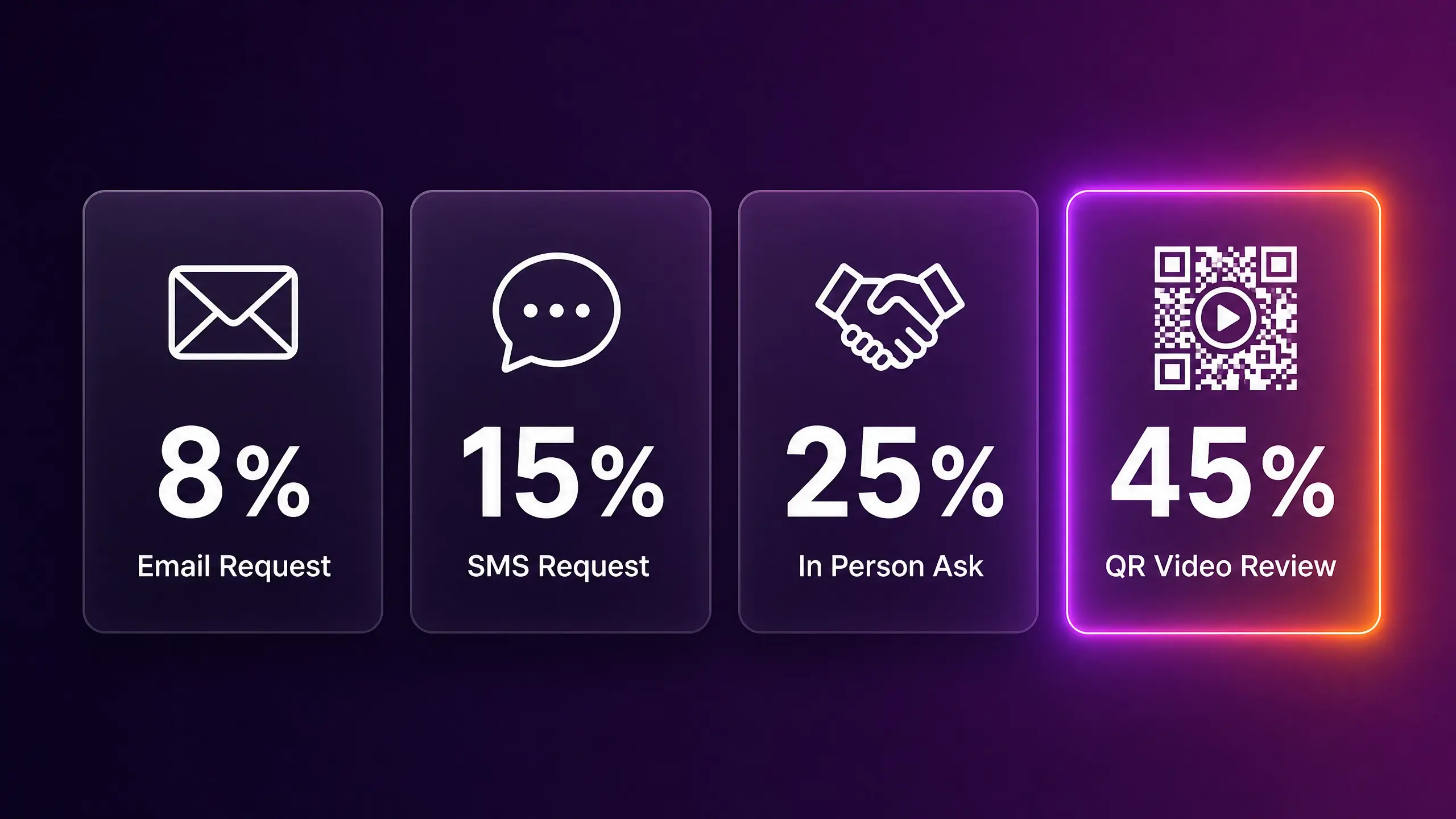
Most advice says "ask at the right time" without saying which method of asking actually gets a response. Here's the real difference:
Method | Typical Response Rate | Why |
Email sent a few days later | 3 to 8 percent | Job details have faded, low urgency |
Text message link same day | 8 to 15 percent | Faster, but still requires the customer to click and type |
In-person ask before leaving | 15 to 25 percent | High-trust moment, but still depends on the customer following through later |
QR code with on-site video capture | 25 to 45 percent | Removes almost all friction; customer records a short clip on the spot |
Why Video Reviews Build More Trust for Safety-Sensitive Work
Electrical work is not a low-consideration purchase. Homeowners worry about shock risk, fire risk, code compliance, and whether the person in their home actually knows what they're doing. A star rating alone doesn't answer those concerns. A 30-second video of a real homeowner saying "they explained exactly what was wrong and fixed it safely" answers all of them at once.
Text reviews can be skimmed and forgotten. Video reviews get watched, and they carry a kind of proof a written star rating can't fake. For a trade where trust is the entire sale, that difference matters more than it does for a coffee shop or a nail salon.
This is the core idea behind Sync Reviews, electrician reputation management software: capturing reviews as on-site video at the exact moment the job is done, and the customer feels safe again, then turning that into content for your website and Google profile automatically.
How AI Tools Are Now Reading Electrician Reviews
Every guide on this topic focuses on Google's map pack. Almost none mention what's happening in AI search.
In the event that a homeowner approaches Chat GPT, Google AI Mode, or Perplexity with the question of "Who is a good electrician around here?" or "Is it safe for me to hire this electrician?", they take into account the exact same factors which were always relevant, i.e., number of reviews, star ratings, freshness of data, and content of the reviews themselves. A poorly reviewed electrician receives no mention whatsoever in an AI response. One with a strong, detailed, recent profile does.
This means your reviews are no longer just an SEO input. They're becoming a factor in whether AI tools recommend you as a safe, trustworthy choice, or skip you entirely.
When to Ask, Job by Job
Not every electrical job earns the same review request at the same moment. Timing can be determined by when the customer becomes satisfied that the job is done.
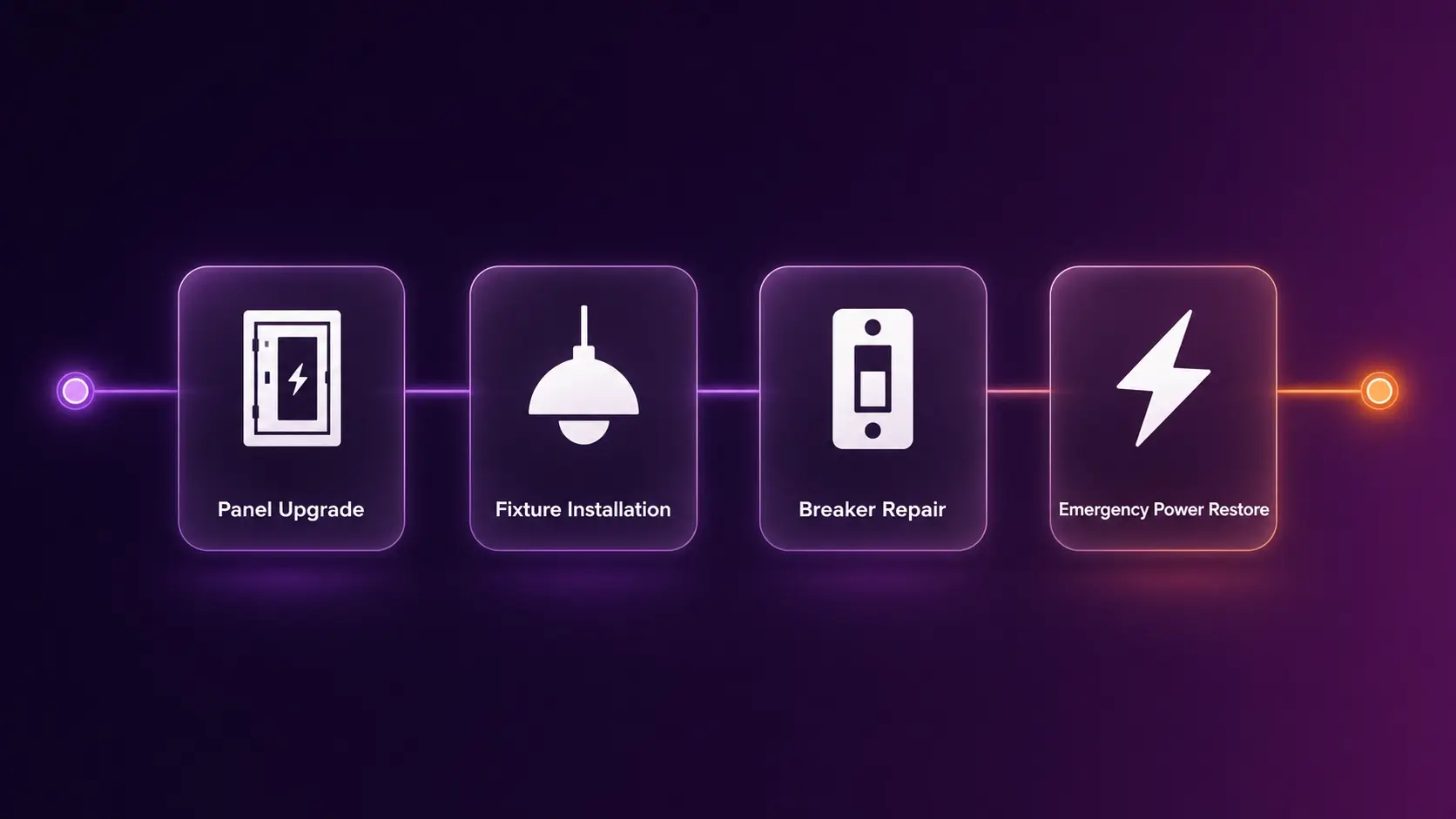
Panel upgrade: Ask after the walkthrough or inspection, when the homeowner understands what changes have been made.
Outlet or fixture installs: Ask once the new work is tested and the customer can see it functioning.
Rewiring or breaker work: Ask after the customer understands what was replaced and why it was necessary.
Emergency repairs: Ask once power is restored and the issue has been explained calmly, not in the middle of the stress.
Pricing disputes or callbacks: Don't ask yet. Resolve the concern first. Questioning when there is still an ongoing issue always ends up badly.
Review Management Across Google, Yelp, and Facebook
It is quite difficult to keep up with reviews posted on three or four different websites at once, particularly when it comes to those that need quick attention because of their negative nature. Having all of them on the same dashboard ensures nothing gets missed and helps in responding from one place only.
Handling a Negative Electrician Review
Disputes regarding electricity can include matters of pricing, safety advice, or rules, all of which can be easily debated and easily regretted after debate.
Answer in 24 hours. Speed signals you take the concern seriously.
Acknowledge the specific issue, not a generic apology.
Never debate pricing or code details in the public thread. Invite the customer to review the specifics privately.
Move the resolution offline through a direct phone number or email.
Responding to a negative review professionally is usually better than getting another five-star rating. Future buyers will notice both the negative review and the professionalism of the company when handling such a review.
Reporting a Fake or Policy-Violating Review
Of course, there are fake reviews from competitors or even non-customers. The good news is that Google will investigate a review and delete it if it violates their policies, but you will have to prove your point.
Google's own Business Profile review policies spell out exactly which violations qualify and what evidence helps.
Check if you have a customer record. If the reviewer's name, date, or job details don't match anything in your system, that's your first piece of evidence.
Flag it through your Google Business Profile, selecting the specific policy violated (fake engagement, off-topic content, conflict of interest).
Include details in your response, stating plainly that you have no record of this customer, without being defensive or hostile.
Give it time. Removal isn't guaranteed and can take one to two weeks, but clear, specific evidence gets acted on far more often than a vague dispute.
Building a Review System That Works Without You Chasing It
Most electricians collect reviews by accident. A satisfied customer happens to leave one, and everyone else moves on. A real system makes it the easy default for every completed job, not the rare exception.
If you want to see how on-site video capture fits into your existing workflow, take a look at how Sync Reviews works across capture, showcase, convert, and protect for home service contractors.
Want to stop losing jobs to contractors with more reviews?
Start your 7-day free trial. Show your first QR code today. Have proof in your dashboard before tonight.
Start Free TrialFrequently asked questions
Review management for electricians involves obtaining reviews after completing electrical projects, replying to them in a timely manner, and remaining active on your profile so that homeowners will hire you for safety-critical electrical jobs.

Stop losing jobs to contractors
with more reviews.
Show your first QR code today. Have proof in your dashboard
before tonight. 7 days free, no credit card, no contracts.